Watching someone you love struggle with addiction is one of the most painful and disorienting experiences a family can go through. You may feel helpless, frightened, angry, or all three at once. You may have tried everything you can think of, and nothing has worked. This guide is written for you — not to give you a magic solution, but to give you honest, practical guidance on what actually helps, what doesn't, and how to find professional support in Phoenix.
Signs to Look For
Addiction rarely announces itself clearly. It often develops gradually, and by the time the signs are obvious, the problem has usually been present for much longer. Here are some behavioral and physical changes that may indicate a substance use disorder:
Behavioral Signs
- Increasing secrecy, withdrawal, or isolation from family and friends
- Unexplained financial problems — borrowing money, missing bills, or asking for cash frequently
- Neglecting responsibilities at work, school, or home
- Changes in friend groups, especially dropping longtime friends for new, unknown ones
- Mood swings, irritability, or unusual emotional volatility
- Loss of interest in hobbies or activities that once mattered
Physical Signs
- Significant changes in weight or appearance
- Bloodshot eyes, constricted or dilated pupils
- Slurred speech, poor coordination, or unexplained drowsiness
- Track marks on arms, or an unexplained need to wear long sleeves
- Smelling of alcohol frequently, or a chronic smell of smoke
None of these signs alone confirms addiction, and some may have other explanations. But a cluster of these changes, especially combined with denial or defensiveness when questioned, is worth taking seriously.
How to Have the Conversation
There is no perfect script for this conversation. But there are approaches that tend to work better than others. The goal is not to win an argument or force compliance — it's to open a door.
What Tends to Work
- Choose a calm moment when your loved one is sober and neither of you is in the middle of a conflict
- Use "I" statements: "I've been scared watching you," not "You're destroying everything"
- Express love first. Lead with care, not accusation.
- Be specific about what you've observed, not about what you've concluded
- Have information ready — a phone number, a name of a program — so that if they say yes, you can act immediately
What Tends Not to Work
- Ultimatums delivered in anger often backfire and close doors rather than open them
- Lecturing or moralizing rarely changes behavior — it usually triggers defensiveness
- Enabling behaviors, even from a place of love, such as covering up consequences or providing money that funds use
- Comparing your loved one to others or using shame as a motivator
If the first conversation doesn't go well, don't give up. Ambivalence is a normal part of addiction. Most people who eventually enter treatment had multiple conversations with loved ones before they were ready.
Family Counseling at Barbell Saves
Addiction is a family disease — not in the sense of blame, but in the sense that it affects every member of the household. Family members develop their own patterns of anxiety, enabling, over-functioning, and emotional shutdown in response to a loved one's use. These patterns don't automatically disappear when the person with addiction gets help. That's why family involvement in treatment matters.
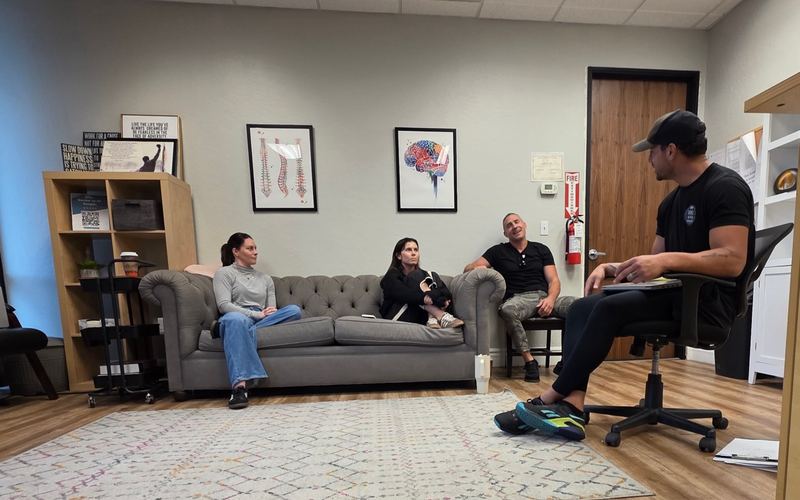
At The Barbell Saves Outpatient Center, we offer family counseling as part of our treatment model. This includes:
- Sessions with a licensed therapist that include both the client and family members
- Psychoeducation for families on addiction as a brain disease, not a moral failure
- Communication skills training to help families interact in ways that support recovery
- Support for family members in setting healthy boundaries — not punitive ones
- Referrals to Al-Anon, Nar-Anon, and other peer support communities for families
Why Family Involvement Improves Outcomes
Research consistently shows that people in recovery who have engaged, supportive family involvement have significantly better outcomes — higher rates of treatment completion, longer periods of abstinence, and better overall quality of life. The family system can either reinforce recovery or inadvertently undermine it. Treatment that ignores the family is leaving a powerful variable unaddressed.
At the same time, family members need support too. Caregiver burnout, anxiety, codependency, and grief are real and common. Getting help for yourself is not selfish — it's part of the solution.
If your loved one is not yet ready to seek help, call us anyway. We can provide guidance, resources, and a compassionate ear to help you figure out the next right step — for them and for yourself.